



You should request a full diagnostic scan during every major service interval, typically every 10,000 to 15,000 kilometers, or immediately if a warning light appears on your dashboard.
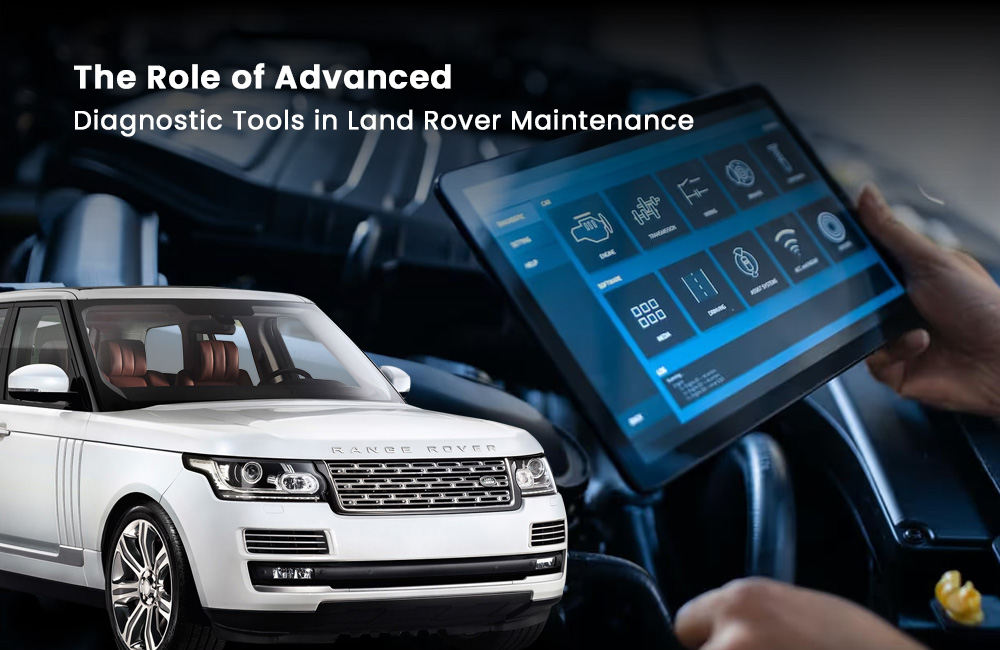
The Role of Advanced Diagnostic Tools in Land Rover Maintenance
22 Apr 2026
Table of Contents
- The Modern Land Rover: A Symphony of Sophisticated Engineering
- What Makes Diagnostic Tools "Advanced" for Land Rovers?
- Pinpointing Issues: Advanced Diagnostics Across Key Land Rover Systems
- The Expert Technician: The Human Element in Advanced Diagnostics
- Proactive Land Rover Maintenance: Leveraging Advanced Tools for Long-Term Health
- The Benefits for Land Rover Owners: Why Advanced Diagnostics Matter
- Choosing a Land Rover Service Center with Advanced Diagnostic Capabilities
- Conclusion: The Indispensable Role of Advanced Diagnostics in Modern Land Rover Ownership
- Frequently Asked Questions (FAQ)
Owning a luxury SUV in Dubai means navigating extreme temperatures, urban traffic, and rugged desert dunes. To keep your vehicle running flawlessly, proper Land Rover maintenance is not just an option-it is a strict necessity.
Long gone are the days when a mechanic could simply listen to an engine and pinpoint the problem. Today, these vehicles rely on a vast network of computers and sensors. This makes advanced diagnostic tools the true backbone of effective vehicle care.
If you want to protect your investment, understanding how these tools work is vital. This guide explores the critical role of advanced diagnostics in delivering top-tier Land Rover maintenance and repair.
The Modern Land Rover: A Symphony of Sophisticated Engineering
From Mechanical to Mechatronic: The Evolution of Vehicle Systems
Automobiles have evolved from simple mechanical devices into mechatronic marvels. Mechanical fixes alone are not enough. Today's Land Rover systems integrate hardware with sophisticated software to handle everything from the fuel injection system to the climate control.
This means that repairing automobiles today requires IT capabilities in addition to mechanical knowledge. If the software isn't up to date, technicians are working in a blind spot.
The Unique Complexity of Land Rover and Range Rover Models
Land Rovers stand out because of their dual nature. They provide premium comfort on the road and unparalleled capabilities off-road. Features such as those of the Terrain Response system and adaptive air suspension rely on dozens of sensors to communicate in real time.
If one sensor emits an inconsistent signal, it can affect the whole experience of driving. The management of this complexity requires specialized equipment that the repair shops of everyday use don't have.
Why Standard OBD-II Scanners Fall Short
You may have seen basic OBD-II scanners in auto parts shops. While they can read common engines, they just scrape the surface.
A scanner that is standard scanner might inform you that there's the possibility of an "engine misfire." An advanced diagnostic tool can reveal to a technician precisely which engine was misfiring, at what temperature, and at what speed. Using basic tools used in luxury SUVs usually results in guesswork, wasted time, and unnecessary part replacement.
What Makes Diagnostic Tools "Advanced" for Land Rovers?
Beyond Basic Code Reading: Understanding Diagnostic Trouble Codes (DTCs)
Advanced tools can do more than just give you a nonspecific Diagnostic Trouble Code (DTC). They offer the context. Manufacturer-specific software translates these codes into detailed fault descriptions tailored to your exact make and model.
Manufacturer-Specific Software and Hardware
True experts use software that was designed especially to work with Jaguar Land Rover (JLR) vehicles. The software is able to communicate seamlessly with the vehicle's own control modules. It allows access to the deeper layers of data about the vehicle that scanners from aftermarket brands cannot access.
Live Data Streaming and Performance Analysis
Advanced diagnostics allow technicians to view live data while the engine is running. They can monitor fuel pressure, air intake, and transmission temperatures in real-time.
| Feature | Basic OBD-II Scanner | Advanced Land Rover Diagnostic Tool |
|---|---|---|
| Code Reading | Generic emissions codes | Proprietary manufacturer codes |
| Live Data | Limited to basic engine stats | Full system real-time monitoring |
| Bi-directional | No | Yes (can test individual parts) |
| Programming | No | Can program and update modules |
Bi-directional Control and Actuator Testing
One of the major advantages of modern tools is the bi-directional control. The computer is able to be able to read information, but also communicate directions to vehicles. Technicians can utilize the tool to switch on the cooling fan, activate an air suspension unit, or even test a window motor without disassembling the door.
Software Updates, Calibration, and Adaptation Resets
Similar to the smartphone you use, your vehicle requires software updates. Advanced diagnostic systems are able to connect and download the newest version of the firmware supplied by the maker. They can also reset adaptations, which are the learned behaviours of your engine and transmission after an extensive repair, which ensures the smooth operation.
Pinpointing Issues: Advanced Diagnostics Across Key Land Rover Systems
Engine and Drivetrain Diagnostics
The engine of your vehicle requires precise timing and delivery. Diagnostic tools check camshaft locations as well as turbocharger boost pressure and exhaust emission. This allows technicians to spot small timing issues before they lead to an engine breakdown that is catastrophic.
Suspension and Braking System Analysis
The adaptive air suspension that is adaptive is a characteristic aspect of these vehicles. Diagnostics are able to calibrate the ride height, measure the performance of the compressor, and locate slow leaks within the air struts. When it comes to brakes, this system is able to control an ABS module to flush to release air, which will ensure the maximum power for stopping.
Electrical Systems and Control Modules
Modern SUVs have dozens of Electronic Control Units (ECUs). Modern tools trace the entire network to spot communication issues. If your battery continues to drain, Diagnostics will pinpoint the component that isn't able to "go to sleep" when you turn off your vehicle.
Infotainment and Comfort Systems
Even luxury features require diagnostics. If your touchscreen is frozen or your climate control is blowing warm air, special software can trace the issue to a specific sensor, electrical, or software problem.
The Expert Technician: The Human Element in Advanced Diagnostics
Beyond the Tool: The Art of Interpretation
Diagnostic tools are only effective in the hands of the person who holds them. The tool will provide data, but the technician has to be able to interpret the information. A professional knows that the code that indicates a malfunctioning oxygen sensor could be the result of a concealed vacuum leak.
Specialized Knowledge of Land Rover Architecture
Experience is important. Technicians who have been trained in British luxury cars are aware of the peculiarities of their vehicles. They understand how wiring harnesses are routed and the components that are susceptible to stress due to the UAE climate.
The Diagnostic Workflow: From Warning Light to Resolution
- Initial Scan: Read all global fault codes.
- Data Analysis: Review live data and freeze-frame records.
- Physical Inspection: Verify the digital data with a manual check.
- Targeted Testing: Use bi-directional controls to test specific parts.
- Resolution: Repair the issue, clear the codes, and perform a test drive.
Proactive Land Rover Maintenance: Leveraging Advanced Tools for Long-Term Health
Routine Diagnostic Checks and Preventive Care
Awaiting the check engine light to come on is an unwise strategy. Prevention of problems on Land Rovers involves running a complete system scan at each routine maintenance. This proactive approach can identify failing parts -- like a weakening gas pump -- before they can leave you stuck at Sheikh Zayed Road.
Optimizing Performance and Fuel Economy
By regularly updating software and adapter resets, Diagnostics directly contribute to Land Rover performance optimization. An engine that is properly calibrated will burn more fuel and deliver the power you need, and also save you money at the pump.
Preserving Off-Road Capabilities and Longevity
If you are taking your vehicle to the Dubai desert, the drivetrain will take some beating. Regular diagnostic checks will ensure that the Terrain response system and the differential locks are in good working order and give you a sense of security on the dunes.
The Benefits for Land Rover Owners: Why Advanced Diagnostics Matter
Enhanced Safety and Reliability
By ensuring that your steering, braking, and traction control devices are not defective, advanced diagnostics help ensure that you and your family are secure. Driving with complete security.
Optimized Performance and Drivability
Your luxury vehicle should feel smooth and powerful. Precise electronic tuning ensures gear shifts are seamless and acceleration is highly responsive.
Cost Savings and Preserved Resale Value
The result of a lack of knowledge is that you end up replacing parts that aren't actually damaged. Pinpoint diagnostics help you avoid excessive labor costs. Additionally, maintaining a clean, recorded digital health record can significantly increase the value of your car's resale in the highly competitive UAE market.
Choosing a Land Rover Service Center with Advanced Diagnostic Capabilities
What to Look For in a Specialist
When you are choosing the Land Rover service center, be sure to look for transparency. They should also be able to talk about their diagnostic software (like SDD or Pathfinder). Find certifications and specific knowledge of British luxurious vehicles.
Questions to Ask Your Service Provider
- Do you use manufacturer-specific diagnostic software?
- Will you provide a detailed printout of the fault codes?
- Are your technicians factory-trained or specialized in luxury European cars?
Avoiding Generic Auto Repair Shops for Complex Issues
A sophisticated luxury SUV in a standard corner garage can do much more damage than benefit. Without the proper equipment, they could attempt mechanical solutions that cause an array of electronic malfunctions. Make sure to choose a specialist who is dedicated.
Conclusion: The Indispensable Role of Advanced Diagnostics in Modern Land Rover Ownership
Investing in Longevity and Performance
A well-maintained vehicle will be an investment rather than a cost. Implementing advanced diagnostics is the best way to safeguard your investment. These bridges wear and perform with precision, ensuring that your vehicle is as efficient as the engineers had envisioned.
The Future of Land Rover Maintenance
As cars move towards automated driving and electrification, the dependence on cutting-edge software will only increase. Working with a progressive servicing center located in Dubai will ensure that your car remains efficient, reliable, and luxurious for years to come.
FAQs – The Role of Advanced Diagnostic Tools in Land Rover Maintenance
Explore our FAQs below or find the answers you're looking for right here.
-
How often should I get a diagnostic scan for my Land Rover?
-
Can a standard mechanic diagnose my Range Rover?
While a standard mechanic can read basic engine codes, they lack the proprietary software needed to access advanced modules like the air suspension, transmission, and Terrain Response systems.
-
Will an advanced diagnostic scan tell me exactly what part to replace?
The scan provides a highly specific fault code and pinpoints the failing system. However, an expert technician must still interpret this data and perform physical tests to confirm exactly which component needs replacement.
-
How does the Dubai climate affect my vehicle's electronics?
Extreme heat and fine desert sand can stress electronic control modules, degrade wiring insulation, and strain the cooling systems. Regular diagnostics help catch heat-related sensor failures early.
-
Is preventative diagnostic scanning worth the extra cost?
Absolutely. Finding a minor sensor issue before it causes catastrophic engine or transmission damage saves you significant amounts of money and prevents unexpected breakdowns.
-
What is bi-directional testing?
Bi-directional testing allows the technician's computer to send commands to the vehicle. For example, they can use their tablet to command a specific window to roll down, proving whether the motor or the switch is broken.
-
Do software updates really improve performance?
Yes. Manufacturers frequently release software updates to fix known bugs, optimize fuel mapping, and improve transmission shift points. Updating your vehicle's software can noticeably enhance drivability.